Top 10 Reasons Indoor Lights Affect Mood?

Time:2026-09-06 Author:Mason
0%

Indoor lighting quietly shapes how a room feels and how people behave inside it. A warm lamp can make a living room feel calmer, while harsh blue-white light may create tension during an evening meal. Many people notice these changes without understanding the cause. So, why do indoor lights affect mood?

The answer involves several connected factors, including brightness, color temperature, glare, shadows, and timing. Light influences the body’s circadian rhythm, which helps regulate sleep and daily alertness. It also affects visual comfort, concentration, and emotional impressions of a space. Research from sleep and environmental psychology suggests that poorly timed or overly intense light may disturb rest and increase fatigue. However, lighting does not affect everyone equally. Personal sensitivity, age, work habits, and existing health conditions can change the response.

This guide explores ten practical reasons indoor lights affect mood. It connects scientific findings with familiar experiences, such as squinting beneath a ceiling fixture or feeling relaxed beside a small bedside lamp. The evidence is useful, but not perfect. Some lighting studies use controlled rooms that differ from real homes, and individual reactions can be difficult to measure. That limitation matters.

Small changes may still help. Softer evening light, reduced glare, and brighter daytime exposure can support a more comfortable environment. The goal is not to label one bulb as universally good or bad. It is to understand how light interacts with people, rooms, routines, and emotions.
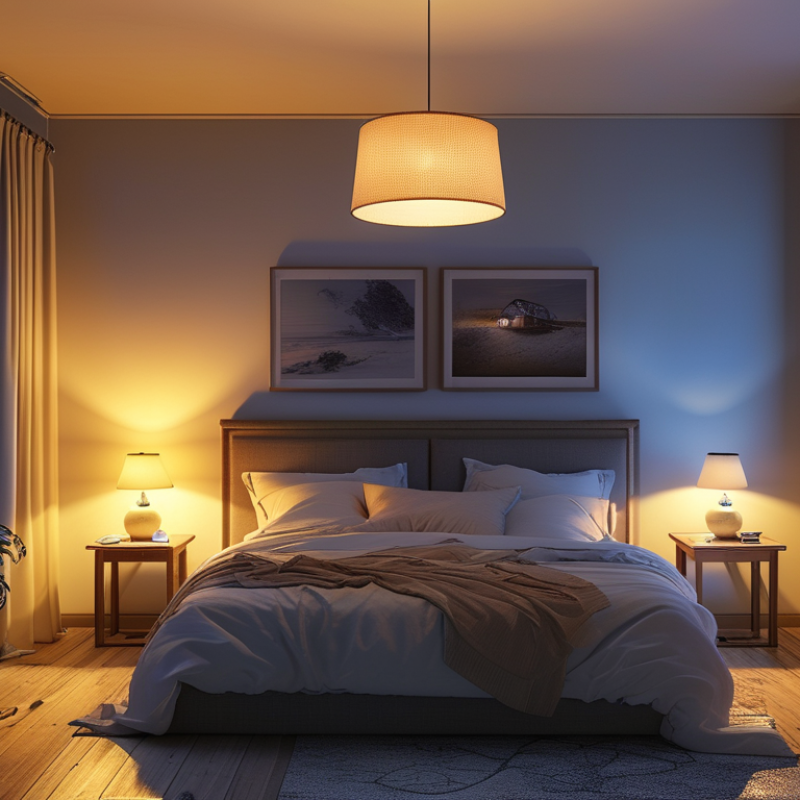
Top 10 Reasons Indoor Lights Affect Mood?

How Indoor Lighting Influences the Brain and Emotional Responses

Top 10 Reasons Indoor Lights Affect Mood

Indoor lighting influences the brain through brightness, color, timing, and visual comfort. Morning light can support the body’s circadian rhythm, helping people feel more alert. In contrast, dim evening light may prepare the brain for rest. Blue-rich light can delay melatonin release when exposure happens late at night. The effect depends on duration and intensity.

Light also shapes emotional responses in quieter ways. A bright, evenly lit kitchen may encourage activity and conversation. Soft, warm light can make a small room feel calmer. Harsh glare, deep shadows, and visible flicker may increase eye strain or irritability. I have noticed this while working under a cold ceiling lamp. My shoulders tense before I recognize the discomfort.

Color temperature, contrast, and personal control matter too. People often feel better when they can adjust a lamp instead of accepting one fixed setting. Lighting can also affect concentration, social confidence, sleep quality, and perceived safety. However, these responses are not universal. Culture, age, eyesight, migraine history, and current stress can change the experience. Research supports connections between light, circadian biology, and mood, but it does not explain every individual reaction. Some lighting advice sounds overly certain. Real rooms are messier. A comfortable solution may require testing brightness, reducing glare, and observing mood across several days.

Light Exposure and the Regulation of Sleep and Circadian Rhythms

Top 10 Reasons Indoor Lights Affect Mood

Light is not merely decoration. It is a biological signal. Bright indoor light can reach the eyes during the evening and delay melatonin release. Melatonin helps prepare the body for sleep. When this timing shifts, bedtime may feel strangely difficult. Poor sleep can then affect patience, focus, motivation, and emotional balance. Cooler, brighter light may increase alertness during work hours. Dimmer, warmer light often supports a calmer evening atmosphere. These effects vary between people. Age, eye health, stress, and daily routines also matter.

Light exposure influences the circadian rhythm, the body’s roughly 24-hour timing system. Morning light helps anchor this rhythm. Late-night brightness may confuse it. I once assumed any bright room improved productivity. That idea was too simple. A well-lit office helped me focus, yet the same intensity near bedtime left me restless. Research on sleep and circadian health supports consistent daytime light and reduced evening exposure. Still, individual responses are not perfectly predictable.

Tips: Open curtains soon after waking. Spend time outdoors when possible. Keep work areas bright, but reduce glare. Use softer lighting during the final two hours before sleep. Avoid placing intense lights directly near your face. Notice your sleep, mood, and energy for one week. Your pattern may challenge common advice. If persistent sleep problems continue, discuss them with a qualified healthcare professional.

Brightness, Color Temperature, and Perceived Energy Levels

Top 10 Reasons Indoor Lights Affect Mood?

Brightness changes how awake a room feels. In my home office, a dim ceiling light makes afternoon tasks feel heavier. A brighter desk lamp helps me read, respond, and stay alert. Yet excessive brightness can create glare, eye strain, and irritability. More light is not always better.

Color temperature also shapes perceived energy levels. Warm light, usually around 2700–3000 kelvin, creates a softer evening atmosphere. It suits bedrooms, dining areas, and quiet conversations. Cooler light, often above 4000 kelvin, can make kitchens and workspaces feel cleaner and more active. Lighting researchers generally connect daytime brightness with alertness, but personal responses vary. Some people feel focused under cool white light. Others find it harsh.

I once replaced a weak lamp with a very bright bulb and expected instant productivity. Instead, the reflective white wall made the room uncomfortable. I adjusted the lamp angle, lowered the brightness, and added indirect light. The result felt calmer, though not perfect. Windows matter too. Natural daylight changes throughout the day, while fixed indoor lighting can feel strangely flat. A practical setup uses brighter, cooler light during demanding daytime work and warmer, gentler light before sleep. Small controls help. Dimmers, shaded lamps, and layered lighting allow the room to match changing energy, attention, and mood.

Indoor Lighting, Stress, Focus, and Social Interaction

Top 10 Reasons Indoor Lights Affect Mood?

Indoor lighting quietly shapes stress, focus, and social interaction. In my experience, a dim corridor can make conversations shorter. A harsh ceiling fixture can make a calm meeting feel strangely urgent. Light affects comfort through brightness, glare, color, and timing. The International Commission on Illumination explains that light also influences circadian rhythms, alertness, and sleep-related biology.

The effect is measurable, though not perfectly predictable. A peer-reviewed office study found that workers with windows received 173% more daytime light. They also slept about 46 minutes longer each night. Better sleep can support concentration and emotional control. The finding does not prove that every bright room improves mood. Individual sensitivity, screen exposure, and workload still matter. That limitation deserves attention.

Focus often improves when light reaches the desk evenly, without reflections on the screen. Moderate brightness can reduce squinting and visual fatigue. Excessive glare may increase tension instead. A 2022 review in Lighting Research & Technology linked well-designed workplace lighting with better visual comfort and task performance, but results varied across studies. Social behavior changes too. Warmer, softer light may encourage relaxed conversation, while brighter neutral light can support active discussion. I may be overconfident here; lighting alone cannot repair a stressful culture. Still, a shadowed face, buzzing fixture, or cold waiting room can alter how people listen, respond, and remain present.

Top 10 Reasons Indoor Lights Affect Mood? — Indoor Lighting, Stress, Focus, and Social Interaction

No. Lighting Factor Mood and Stress Effect Effect on Focus Effect on Social Interaction Evidence-Based Data or Condition Practical Lighting Approach
1 Light Intensity Very dim environments may feel gloomy, while excessively bright light can increase visual discomfort and irritability. Insufficient light can make reading and visual tasks more difficult; adequate light supports alertness. Balanced brightness improves facial visibility and makes conversation more comfortable. Typical indoor task lighting is commonly designed around approximately 300–500 lux, depending on the activity and setting. Use adjustable layers: ambient light for the room plus task lighting for reading, cooking, or detailed work.
2 Color Temperature Warmer light is often perceived as more relaxing, whereas cooler light can feel more stimulating and work-oriented. Cooler white light can support a sense of alertness during daytime tasks, although personal response varies. Warm light generally creates a more intimate and relaxed atmosphere for informal interaction. Color temperature is measured in Kelvin: approximately 2700–3000 K is warm white, while 4000–5000 K is cool white. Consider warmer light in evening and social areas, with neutral or cooler light for daytime work zones.
3 Exposure Timing and Circadian Rhythm Bright, blue-enriched light at night can delay biological sleep timing and may contribute to next-day fatigue or irritability. Poor evening light habits can reduce sleep quality, which indirectly reduces concentration the following day. Sleep disruption may reduce patience, emotional regulation, and willingness to engage socially. The human circadian system is particularly sensitive to short-wavelength light around 460–480 nm, especially during the evening. Prioritize brighter, daylight-like exposure earlier in the day and reduce unnecessary bright light before bedtime.
4 Glare Direct or reflected glare can create discomfort, visual fatigue, and frustration. Glare reduces visual comfort and can make screens, printed text, and fine details harder to see. People may avoid seating positions or conversations when bright sources are directly in their eyes. Common sources include unshielded luminaires, sunlight reflected from screens, and highly glossy surfaces. Use diffusers, shades, matte finishes, and careful placement of lights relative to windows and screens.
5 Flicker Visible or invisible temporal light modulation may cause discomfort, eyestrain, headaches, or stress in sensitive individuals. Discomfort can make sustained reading, screen work, and other attention-demanding tasks more difficult. Physical discomfort can shorten conversations and reduce participation in shared spaces. Flicker risk depends on modulation depth, frequency, waveform, brightness, and individual sensitivity; it is not determined by brightness alone. Choose lighting with well-controlled temporal modulation and avoid visibly flickering sources.
6 Daylight and Window Access Daylight provides changing intensity and color throughout the day, which can support a more natural sense of time and well-being. Access to daylight is associated with improved daytime alertness and may support healthier sleep timing. Windows and views can make shared spaces feel more open, comfortable, and inviting. Outdoor daylight is typically far brighter than indoor lighting, often ranging from several thousand lux to over 10,000 lux in daylight conditions. Place workstations near windows where possible, while controlling glare and excessive solar heat.
7 Light Distribution and Uniformity Strong contrasts between very bright and very dark areas can increase visual adaptation effort and discomfort. Uneven illumination can slow visual search and make it harder to move attention between surfaces. Evenly lit faces and pathways support comfortable eye contact and movement during group interaction. Uniformity is commonly evaluated by comparing minimum illuminance with average or maximum illuminance across a task area. Combine ceiling, wall, and task lighting to reduce harsh bright-dark transitions.
8 Color Rendering Lighting that renders colors naturally can make rooms, food, materials, and skin tones appear more comfortable and believable. Accurate color helps with tasks involving visual comparison, inspection, design, and organization. Natural-looking skin tones and facial expressions can improve visual comfort during face-to-face communication. Color Rendering Index, or CRI, is measured on a 0–100 scale; higher values generally indicate more faithful color appearance, though CRI is not a complete quality measure. Use high-quality, high-color-rendering light where appearance, food, artwork, or interpersonal communication matters.
9 Personal Control and Dimming The ability to adjust lighting can increase perceived comfort and reduce the stress of having to work under unsuitable conditions. Users can select a brightness level and color setting that suits the task, time of day, and visual sensitivity. Flexible lighting allows a room to shift between collaboration, presentation, dining, and quiet work. Individual preferences differ substantially; controllability is therefore an important part of perceived lighting quality. Provide separate controls for ambient, task, accent, and evening lighting whenever practical.
10 Spatial Atmosphere and Social Cues Lighting communicates whether a space is intended for relaxation, concentration, privacy, celebration, or activity. Focused lighting can visually define work areas, while softer surrounding light can reduce the feeling of a harsh, purely task-oriented environment. Warm, moderate, and well-distributed light often encourages longer, more relaxed interaction than stark or overly uniform lighting. Perceived atmosphere depends on the combined effect of brightness, color temperature, contrast, glare, shadows, and spatial layout. Match lighting design to the intended behavior of each zone rather than using one setting throughout the entire interior.

Note: Individual responses to indoor lighting vary with age, eyesight, sleep schedule, migraine sensitivity, task demands, and personal preference. Lux, Kelvin, CRI, and flicker measurements should be interpreted together rather than used as single indicators of comfort.

Healthier Lighting Choices for a More Balanced Mood

Top 10 Reasons Indoor Lights Affect Mood?

Healthier Lighting Choices for a More Balanced Mood

Indoor light does more than reveal a room. It shapes alertness, comfort, and the body’s sense of time. Bright, blue-enriched light can support daytime attention, while dimmer, warmer light may encourage evening calm. The response varies with age, sleep habits, medication, and personal sensitivity. That matters. A lighting choice that relaxes one person may irritate another. Research on circadian rhythms supports a flexible approach, not a single perfect light source.

Healthier lighting begins with function and timing. Use clear, moderate light for reading, cooking, or detailed work. Reduce glare from bare fixtures and glossy screens. Near bedtime, lower the brightness and keep light sources below eye level when possible. A small lamp beside a sofa often feels gentler than a bright ceiling fixture. Daylight also deserves attention; opening curtains early may support a regular sleep-wake pattern. Do not chase darkness all day. Poor visibility can increase eye strain and frustration.

In my own routine, I still get this wrong. I sometimes work under harsh light, then wonder why I feel restless. A simple evening check helps: Is the room bright, glaring, or visually busy? Adjust one feature at a time, and notice your mood over several days. Small changes help. Mood is not controlled by lighting alone. Stress, noise, ventilation, and sleep remain important. If headaches or persistent low mood continue, discuss them with a qualified health professional rather than blaming the lamp.

FAQS

: How can indoor light affect sleep?

: Bright evening light may delay melatonin release. Bedtime can then feel unusually difficult. It varies.

Why does morning light matter?

Morning daylight helps anchor the body’s roughly 24-hour rhythm. Open curtains soon after waking.

Is bright light always better for productivity?

No. Bright light may support daytime focus but cause evening restlessness. I once believed otherwise.

What lighting may feel calmer at night?

Dimmer, warmer light often supports a quieter evening atmosphere. Keep fixtures below eye level when possible.

Can indoor lighting affect mood?

It may influence alertness, comfort, patience, and emotional balance. Stress and sleep also matter.

How should a reading area be lit?

Use clear, moderate light without harsh glare. A desk lamp can illuminate the page directly.

What should people avoid before bedtime?

Reduce intense light during the final two hours. Avoid placing bright fixtures close to your face.

Does everyone respond to light in the same way?

No. Age, eye health, medication, stress, and sensitivity can change the response. Personal patterns may surprise you.

How can someone test whether lighting affects their mood?

Track sleep, mood, and energy for one week. Change one lighting feature at a time.

When should persistent symptoms receive professional attention?

Discuss ongoing sleep problems, headaches, or low mood with a qualified health professional. Do not blame the lamp alone.

Conclusion

Indoor lighting can strongly shape how we feel, think, and respond throughout the day. To understand why do indoor lights affect mood, it helps to consider how light signals influence the brain, emotional responses, and the body’s internal clock. Bright, well-balanced light may support alertness and motivation, while dim or poorly timed lighting can contribute to tiredness, low energy, or irritability. Light exposure also helps regulate sleep and circadian rhythms, especially when daytime brightness and evening darkness are kept in a healthy balance.

Brightness and color temperature can affect perceived energy levels, focus, stress, and even social interaction. Cooler, brighter lighting may encourage concentration, while warmer, softer light can create a calmer and more comfortable atmosphere. Healthier choices include using natural light when possible, adjusting brightness for different activities, limiting harsh light before bedtime, and selecting comfortable lighting that suits the room’s purpose. These simple changes can help create a more balanced mood and supportive indoor environment.

Mason

Mason

Mason is a seasoned marketing professional with a deep expertise in the company's offerings and a passion for driving brand awareness. With a strong background in digital marketing strategies, he has an innate ability to connect with diverse audiences and effectively communicate product benefits.......